
Some water spots are deposits that can be cleaned away. Others have left damage in the surface and may need polishing. A photograph of a pale ring cannot reliably tell us how much work is involved.
That distinction matters when you ask for a quote. I want to find out whether we are removing contamination, improving damaged paint, or working on glass before recommending a treatment.
What water can leave behind.
When mineral-containing water dries, deposits can remain on the surface. A suitable water-spot remover may address those deposits after washing. Etching is different: the finish itself has been affected, so removing the residue may still leave a visible outline.
I begin with cleaning and a controlled assessment. The product needs to suit the material and any existing protection; more pressure or stronger chemistry is not automatically a better answer.
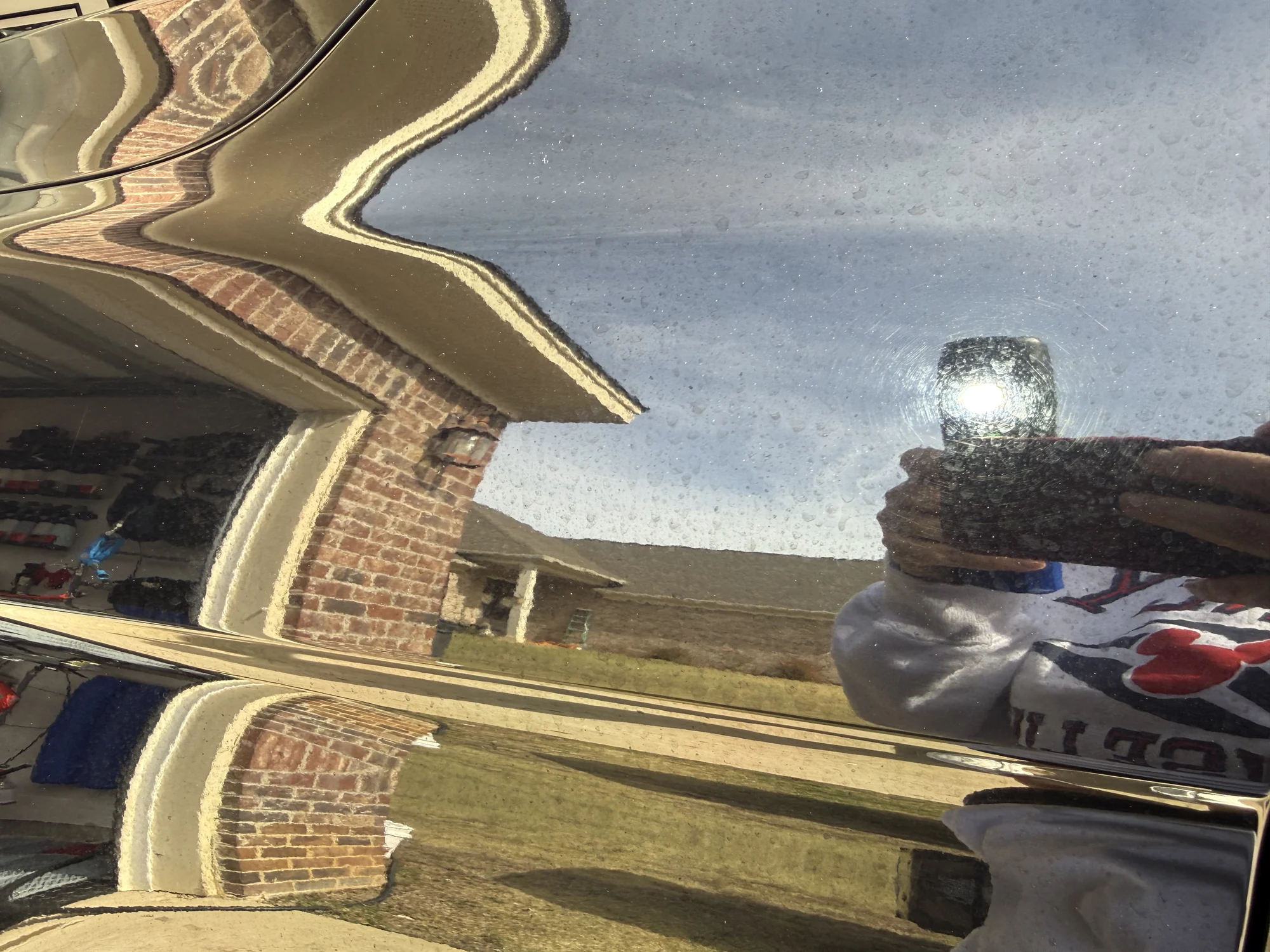
When polishing becomes part of the conversation.
If a mark remains after appropriate cleaning, I inspect it under useful lighting and assess whether correction can improve it. A test area helps establish what the paint will tolerate and what result is realistic.
The Expedition project had heavy swirls and etching. Most of the vehicle received a three-step correction, while previously repainted areas and areas needing caution received less intensive work. The process was chosen area by area, rather than forcing every panel toward the same result.
See the complete correction storyGlass needs its own assessment.
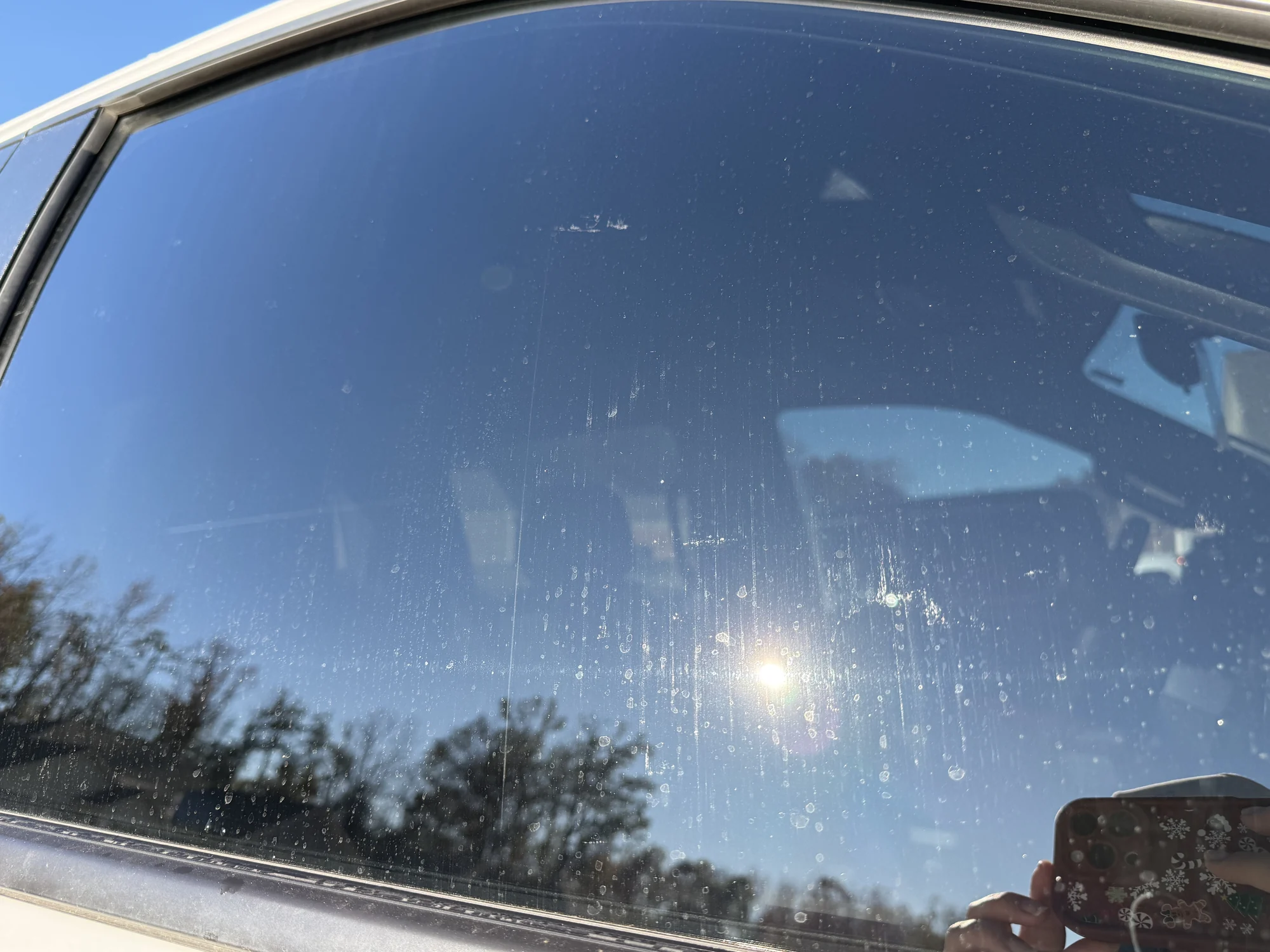
A spotted windshield is not treated as another painted panel. I assess the deposits, the glass, and any previous treatment, then agree on suitable preparation. Some glass needs more involved work than normal cleaning or coating preparation.
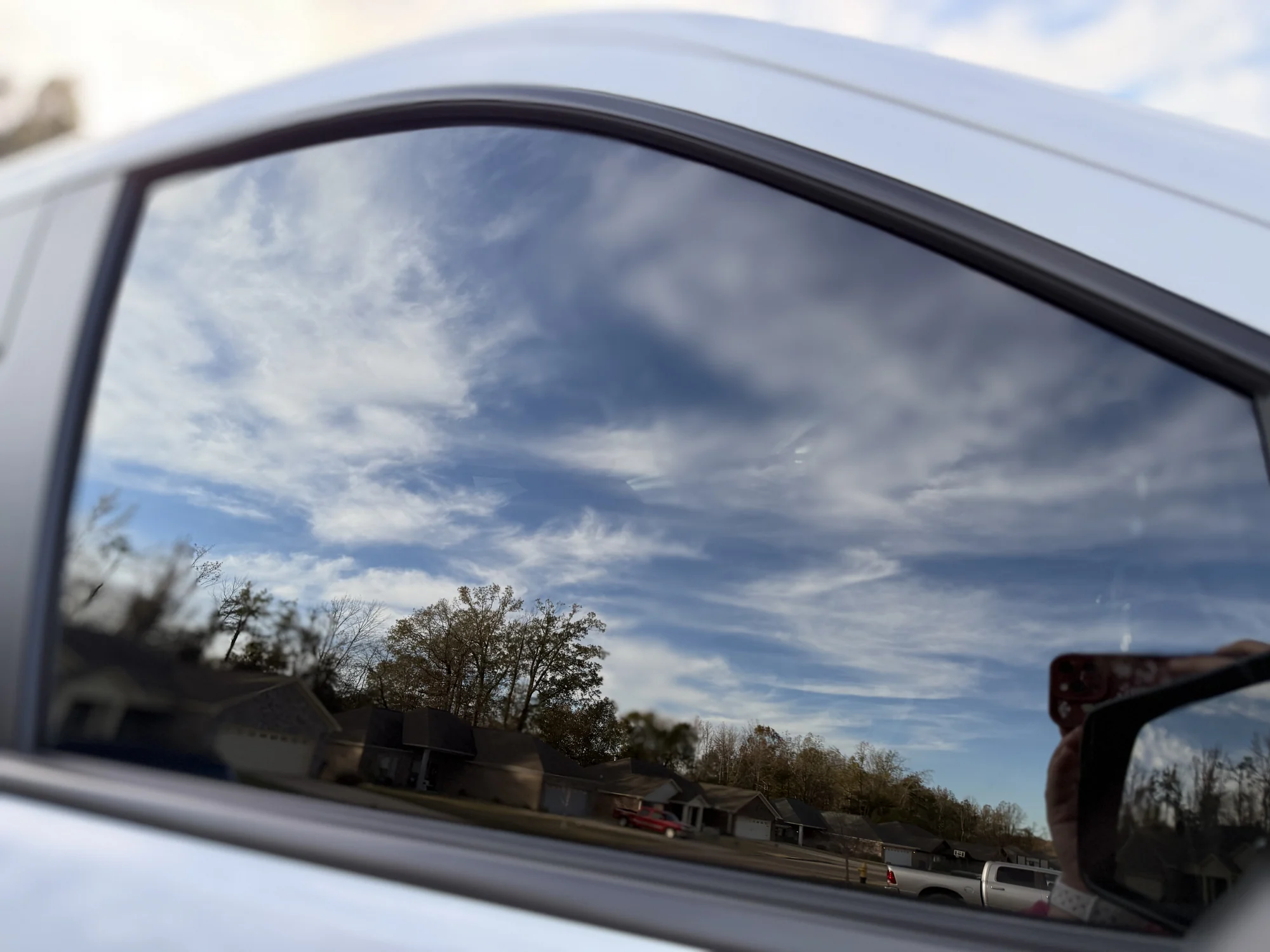
Glass Polishing & Protection is available as a focused appointment. Its quote identifies the windows included and any additional correction needed. The treatment is not a repair for chips or cracks.
The same front passenger-door window is shown before polishing and after protection. Camera position and daylight differ.
Before
After
Protection helps, but drying still matters.
Coated vehicles can still develop water spots. Keeping routine washing and drying on track, and avoiding sprinkler exposure where practical, is more useful than assuming water beading means nothing can stick.
If spots appear on a vehicle I have treated, send a photograph and tell me what happened before trying a polish or an unfamiliar remover. We can choose the next step with the existing coating in mind. Any correction and protection renewal will be discussed before work begins.
Find out what the marks need.
For water spots and paint correction in Oxford, Mississippi, start with an assessment of the affected surface. Tell me whether the marks are on paint or glass, how long they have been there, and what protection is already applied.