
A vehicle can be clean and still look tired in the sun. That is often where the conversation about polishing starts. Washing has removed the dirt, but the swirls, haze, and etched marks are still interrupting the reflections.
The Expedition project is a useful example because the photographs show three separate stages: arrival, after washing, and after correction and ceramic coating. The difference between the last two matters. It explains why a thorough wash and a paint correction are different services.
A closer look at the surface.
On a typical modern gloss finish, a transparent clear coat sits over the color. That surface is not perfectly flat. Its texture, fine scratches, etched areas, and anything bonded to it affect how cleanly it reflects light. Under magnification, the differences become easier to understand.
The familiar peaks-and-valleys picture is useful, but it needs context. A particle stuck above the finish is different from a scratch cut into it. Factory texture, often called orange peel, is different again. A normal correction does not aim to sand every panel completely flat.
01 · Before preparation
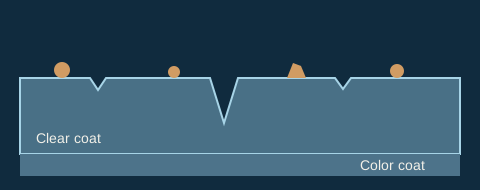
Bonded material sits above the clear coat. Scratches interrupt the surface itself.
02 · Cleaned and decontaminated
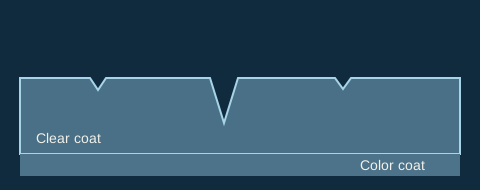
Suitable bonded material is removed. The scratches underneath can remain.
03 · Corrected where appropriate
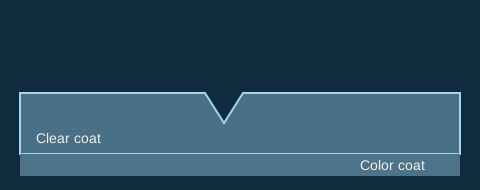
A small amount of finish is removed to reduce defects. Deeper marks may be left to preserve paint.
04 · Protected
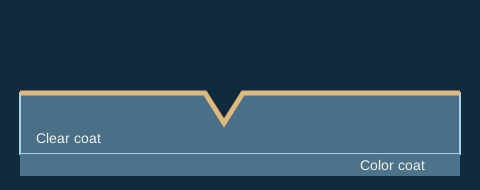
A thin protection layer supports upkeep. It does not rebuild clear coat or repair every remaining mark.
Washing and clay address what is on the paint.
Washing lifts away loose dirt and road film. Some material stays bonded to the surface. Depending on what is there, chemical decontamination or lubricated clay treatment can help remove it. I choose the approach for the contamination and finish rather than automatically doing every process.
Clay is not a scratch-removal step. It can make clean paint feel smoother by removing bonded material while the swirls underneath remain. Sensitive paint can also pick up light marring during mechanical decontamination. That is why I assess it and discuss polishing when it would make a useful difference.
Wash, Clay & Seal suits a vehicle that needs an exterior refresh and renewed protection. It does not quietly become a paint-correction package.
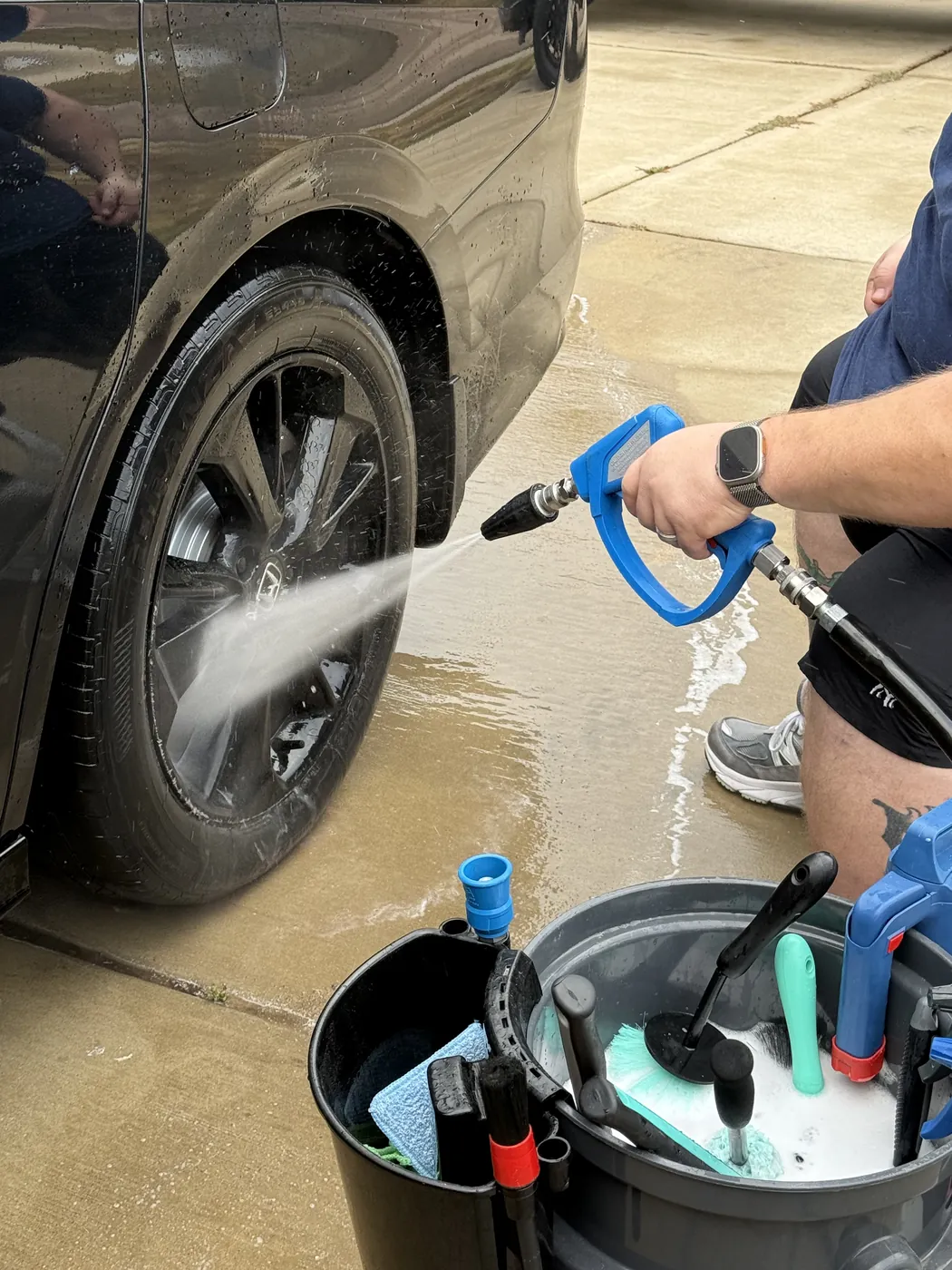
Polishing changes the finish itself.
Abrasive polishing removes a small amount of the finish to reduce suitable defects and improve clarity. Compounding is a more corrective part of that process; finer polishing can refine the result. The pad, liquid, machine, technique, and paint all affect what happens. The number of steps alone does not describe the quality of the work.
There is a limit to what is sensible. Removing a deep scratch completely can mean sacrificing too much surrounding clear coat. Preserving paint can be the better result. Thickness readings, where suitable, provide useful context, but an ordinary gauge does not independently tell me how much clear coat remains.
Most of the Expedition received a three-step correction. Previously repainted areas and other areas needing caution received less intensive work. The golf cart received a one-step polish. Both were deliberate choices for the finish in front of me.
01 · On arrival
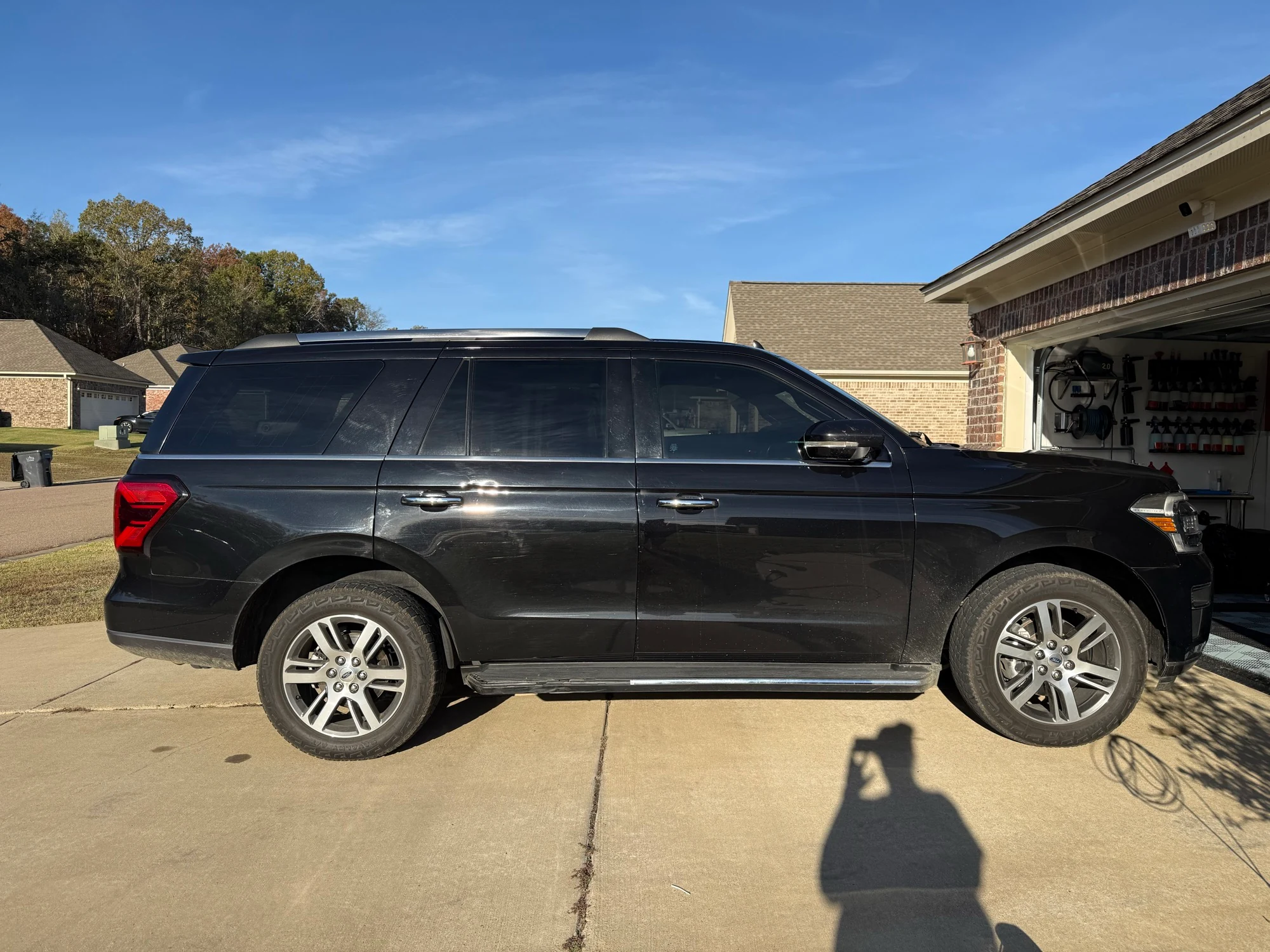
Dirt and a dull, hazy finish.
02 · Washed, before correction
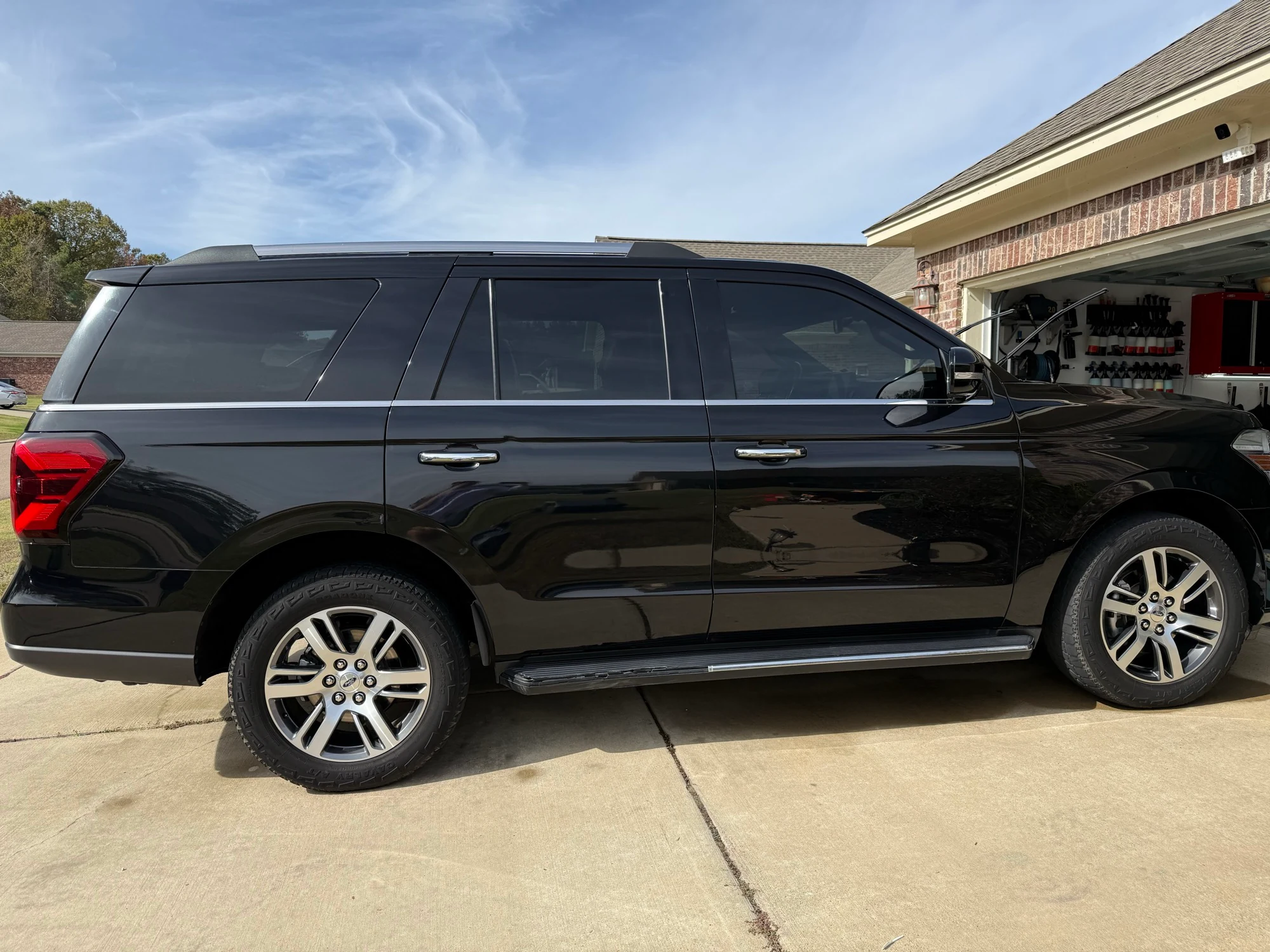
Clean paint. Swirls and etching still present.
03 · Corrected + coated
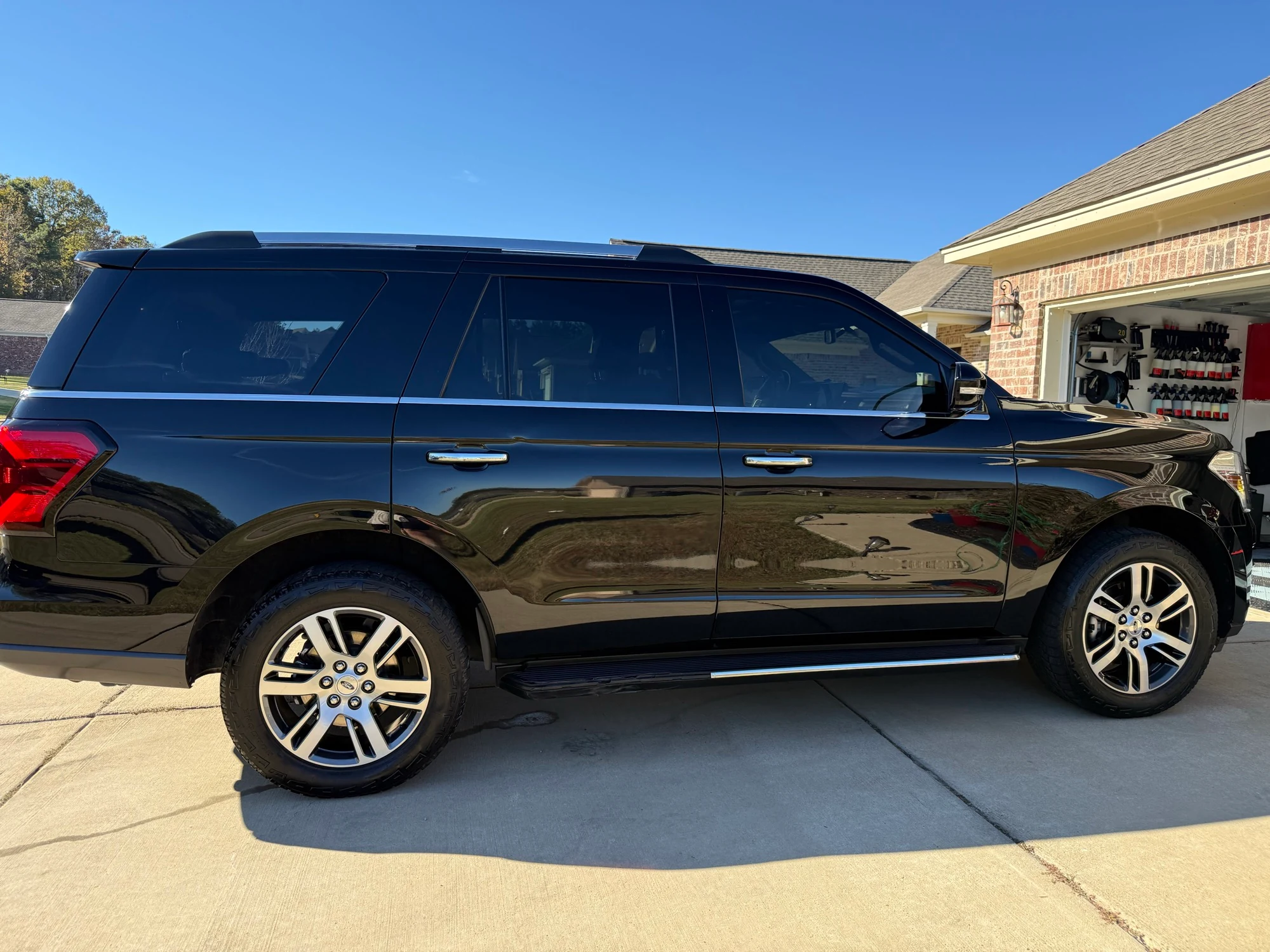
After paint correction and ceramic coating.
Photographs ordered using original capture times. Camera position and daylight vary between stages.
Sealants and coatings protect the prepared surface.
Wax, sealant, and ceramic coating choices change how the surface interacts with water, dirt, and routine cleaning. They are protection choices, not interchangeable promises of performance. The exact product, preparation, application, and care matter.
Some products can temporarily make fine marks less noticeable. That is different from removing those marks. A coating should not be sold as a thick new clear coat that fills every valley, repairs scratches, or stops stone chips. Any protection layer in the illustration is exaggerated so you can see it.
Water beading is useful to see, but it is not the whole condition report. Contamination and maintenance products can change how water behaves. I inspect and clean the surface before deciding whether the protection needs maintenance or replacement.
Choose the improvement you actually want.
If you want a clean, freshly protected exterior, say so. If the swirls and hazy reflections bother you, we can assess correction. If you want the corrected finish to be easier to maintain, we can choose suitable protection. Those choices work together without requiring the same process on every vehicle.
We agree on the result, the preparation, and the price before beginning. You do not need to memorize the chemistry. You should understand what the work changes and what it leaves alone.
Choose the work for your paint.
Whether your priority is a smoother surface, clearer reflections, or easier washing, we can compare the options here in Oxford, Mississippi. I’ll explain when a Wash, Clay & Seal is enough and when polishing or ceramic protection would better fit your goal.